
Book Launch Evening with Phil Cohen
 Book Launch
‘Reading Room Only’ & ‘On the Wrong Side of the Track’ by Phil Cohen
From 6.30pm Friday 10th May
Wivenhoe Bookshop
Phil Cohen will read from and sign his new books, and there will be a screening of ‘Lights On For the Territory’ , a short film featuring John Wallett discussing his narrative map of East London commissioned for ‘On the Wrong Side of the Track?’
Reading Room Only – Memoirs of a Radical Bibliophile
Political activists are popularly supposed to be wild eyed visionaries or ranting dogmatists who spend their time manning real or imaginary barricades. Bibliophiles, in contrast, are expected to be quiet retiring academic types who send their whole lives in libraries and can only relate to the world second hand through books.
In this memoir, Phil Cohen, alias Dr John of the London Street Commune, and erstwhile Professor of Cultural Studies at the University of East London, explodes these stereotypes as he re-traces his chequered career from blitz kid to public school dropout, from hippy squatter to cultural theorist, and from urban ethnographer to poet, through his obsession with books.
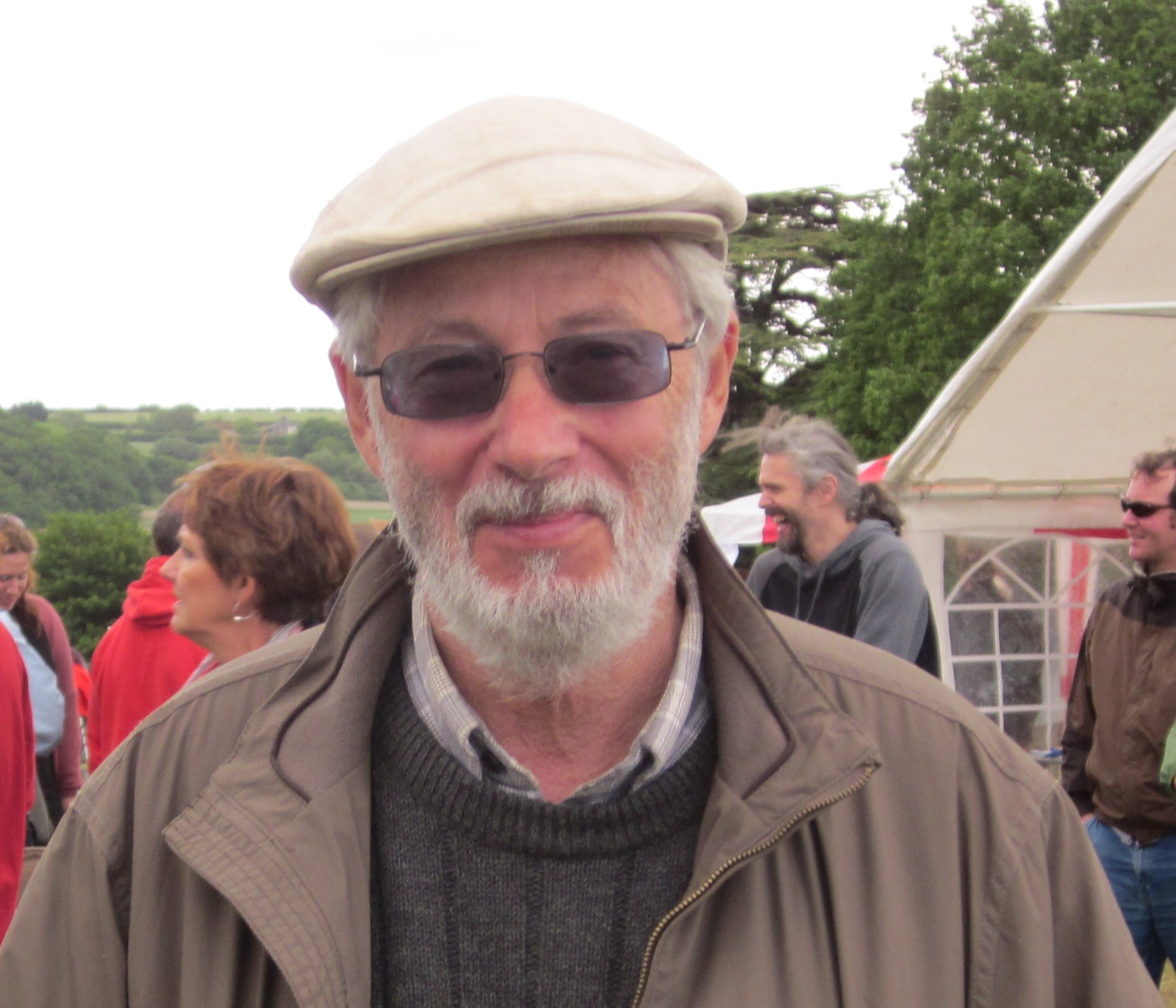
Author Phil Cohen
The first part of the memoir provides a vivid account of what it was like to grow up in Bloomsbury in the late 1940s and ’50s and how its famous squares, buildings and local characters influenced his imaginative life. He describes how he created an alternative identity centred on his own personal ‘reading room’ in counterpoint to the official success story he was supposed to be, as he rebels against the ethos of his public school with its traditional emphasis on Classics, and negotiates the fraught identity politics of being a Jewish ‘mitschling’.
The memoir goes on to detail the author’s adventures as he goes up to Cambridge to read History, runs away to sea and then becomes involved in the ‘underground’ counter culture emerging in the London during the so called ‘swinging sixties’. Books were at the forefront of his activities, whether ‘liberating’ them from bookshops, gluing them together in a situationist provocation against bourgeois culture, or setting fire to them in an ‘event structure’ by artist John Latham. The author relates how the British Museum Reading Room provided a much needed port in the political storm stirred up by his activities as a leader of the ‘hippy squatters’ at 144 Piccadilly in 1969, helping him resume his studies whilst continuing to engage in radical community politics over the next decade. Part One concludes with some observations about the culture of the reading room itself, discusses ten books that shook the author’ world and the impact of new technologies of research linked to the opening of the British Library at St Pancras.
The second half of the memoir explores the author’s life long love affair with books, and situates this consuming passion in relation to the issues raised by Walter Benjamin in his famous essay ‘On Unpacking a library’. The author considers what books might have to say about how they are treated if they were allowed a voice; he goes on to discuss the place of collecting in a ‘throwaway society’ and details the strategies, both rational and irrational, that informed his project of building a personal library. A concluding section celebrates the pleasures of browsing, and speculates about what keeps bibliophiles acquiring books right up to the end.
On the Wrong Side of the Track? East London and the Post Olympics
On the Wrong Side of the Track draws on insights from the human sciences to challenge the arguments of Olympophiles for whom the Games can do no wrong as well as Olympophobes for whom they can do no right, using 2012 as a lens through which to examine underlying trends in contemporary culture.
What did the 2012 Olympics tell us about who we are, who we were, and who we want to be? This book takes 2012 as a starting point for a debate on national identity, community cohesion, urban regeneration and the persistence of inequalities in British society – from the vantage point of East London not only as the main Olympic venue but also as the main argument why Britain won its Olympic bid.
Part one sets the scene, exploring the changing social and physical landscape of East London from the inside – including voices from East London communities and the Olympic Park workers – and from the outside – in the imagination of artists, social commentators and reformers who made the area into an object of public fascination and concern. The second half of the book examines the strategies that were used to present an ‘Olympian’ vision of London to the world; it focuses on the rhetoric and reality of regeneration and the cultural politics of staging the event, pinpointing the differences that East London and the Olympics have made, and will continue to make, to one another. The legacy politics of 2012 are examined in the light of the debate about moral and market economies recently inaugurated by theorists of the Occupy movement.
The book includes a photo essay on the Olympic site, original photographs by Jason Orton, Ian F. Rogers, Loraine Leeson and Peter Dunne, and John Claridge; artworks by Aldo Katayanagi, Jake Humphrey, and Jock McFadyen; cartoon by Julian Wood and maps by William Dant and John Wallett. The cover is a specially commissioned photomontage by Peter Kennard and Tarek Salhany. The book is supported by an online gallery of images and other Olympic materials for further study.
Phil Cohen grew up with Steve Ovett and Jean-Paul Sartre as his teenage heroes and has been trying to get them into the same book ever since. He is author of Knuckle Sandwich: Growing up in the working class city (with Dave Robins); Rethinking the Youth Question; London’s Turning: The making of Thames Gateway (with Mike Rustin); and Borderscapes: memory, narrative and Imagined Community (to be published in 2013). His poetry has been published by Critical Quarterly, Agenda, and Soundings. A memoir Reading Room Only: memoirs of a radical bibliophile is forthcoming. He is Emeritus Professor in Cultural Studies at the University of East London.
You can reserve your copy of either book by calling us on 01206 824050, or by sending us an email.