
Book Launch with Prof. Philip Terry
 Dante’s Inferno
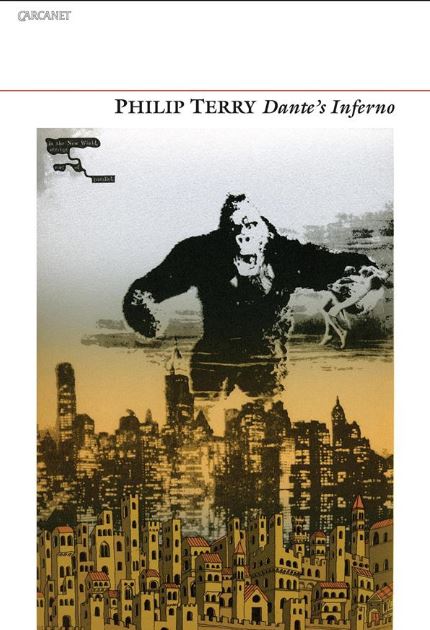
Book Launch with Philip Terry
6.30pm Fri 11th July
Wivenhoe Bookshop
All welcome – RSVP to the Wivenhoe Bookshop
Philip Terry joins us to read from his extraordinary re-telling of Dante’s Inferno, which shifts the action from the twelfth century to the twenty first.
The seven circles of hell are relocated to the modern ‘walled city’ of the University of Essex, where contemporary political figures and celebrities replace Dante’s damned.
About the Book
Philip Terry talks about the book:
Translating Dante again, especially the Inferno, given the wealth of recent translations from C.H. Sisson, Mark Musa and Ciaran Carson among a host of others, calls for some explanation. When that translation involves shifting the action from the twelfth to the twentieth and twenty-first centuries, and relocating it to the University of Essex, some explanation is all the more urgent.
One starting point was architectural: the walled cities of the Italian city-states in the middle ages, typified by Montereggione with its fourteen high towers that stood on its perimeter like giant sentries, to which Dante makes allusion in Canto XXXI, which underpin the iconography of the Inferno, also underpin the architecture of Essex University, where a number of towers surround a central campus, divided up into squares modelled on Italian campi (the origin of our modern word “campus”, meaning “field”).
Another was psychogeographical, taking its cue from the revisioning mappings of the situationists and of writers and artists such as Rebecca Solnit and Jorge Macchi, and involved the palimpsestic strategy of superimposing a map of one place (here Dante’s Inferno) on another (Essex University and its environs).
As the work proceeded, the two maps, by twists and turns, sometimes guided by instinct, sometimes by unpredictable coincidences, began to converge more and more: Dante’s Phlegethon, the river of blood, became the river Colne; his popes were replaced by vice-chancellors and, at the suggestion of Robert Sheppard, David Willetts; his suicides, whose souls are reborn as the seeds of trees, later to be preyed on by harpies, became the trees planted to commemorate untimely student deaths on the Essex campus; the warring Guelfs and Ghibellines of Dante’s Florence were replaced by the sectarians of Belfast, my home city; and Virgil, finally, was replaced by one-time Essex writer-in-residence Ted Berrigan, who, like the Latin poet, had imagined the underworld in his poem Memorial Day: “I heard the dead, the city dead/The devils that surround us”.
By replacing the historical figures in Dante with our contemporaries I hope to have dispensed with the need for extensive footnotes, one of the unavoidable burdens of a more traditional translation, while remaining faithful to the spirit and integrity of Dante’s text.
About the Author
Philip Terry is a poet, writer, and Senior Lecturer in the Department of Literature, Film, and Theatre Studies at the University of Essex.
He was born in Belfast in 1962, and previously taught at the universities of Caen, and Plymouth. His fiction, poetry and translations have been widely published in journals in Britain and America.
His books include the celebrated anthology of short stories Ovid Metamorphosed (2000), Fables of Aesop (2006) the poetry collections Oulipoems (2006) and Shakespeare’s Sonnets (2010), and Tapestry (2013).